On this page
How much water should I drink a day?
The short answer to how much water you should drink a day: about 2.2 litres if you are a woman and about 3 litres if you are a man. Those figures come from the US National Academies, which set an adequate total water intake of 2.7 litres a day for women and 3.7 litres for men. That total counts everything: plain water, other drinks and the water in your food.
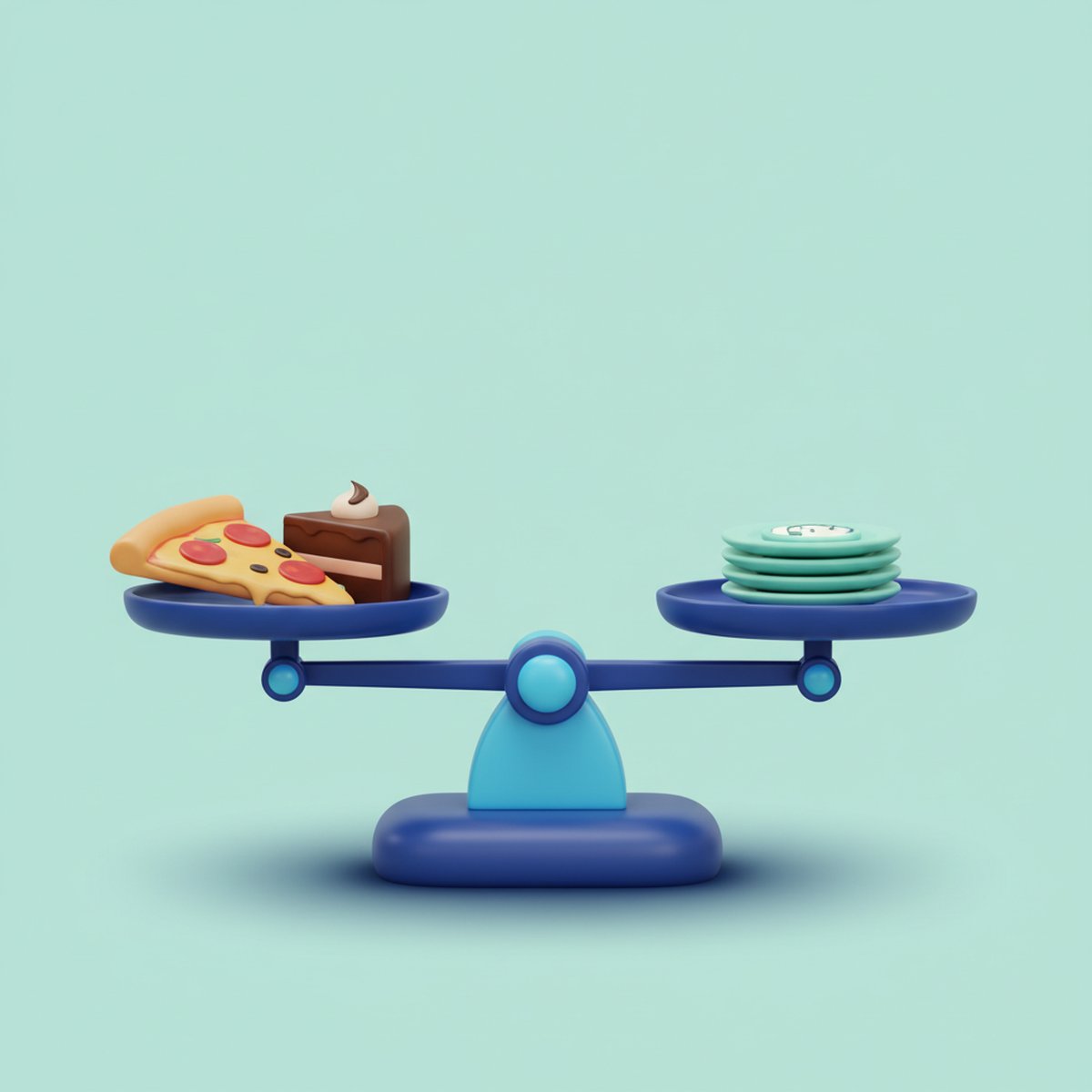
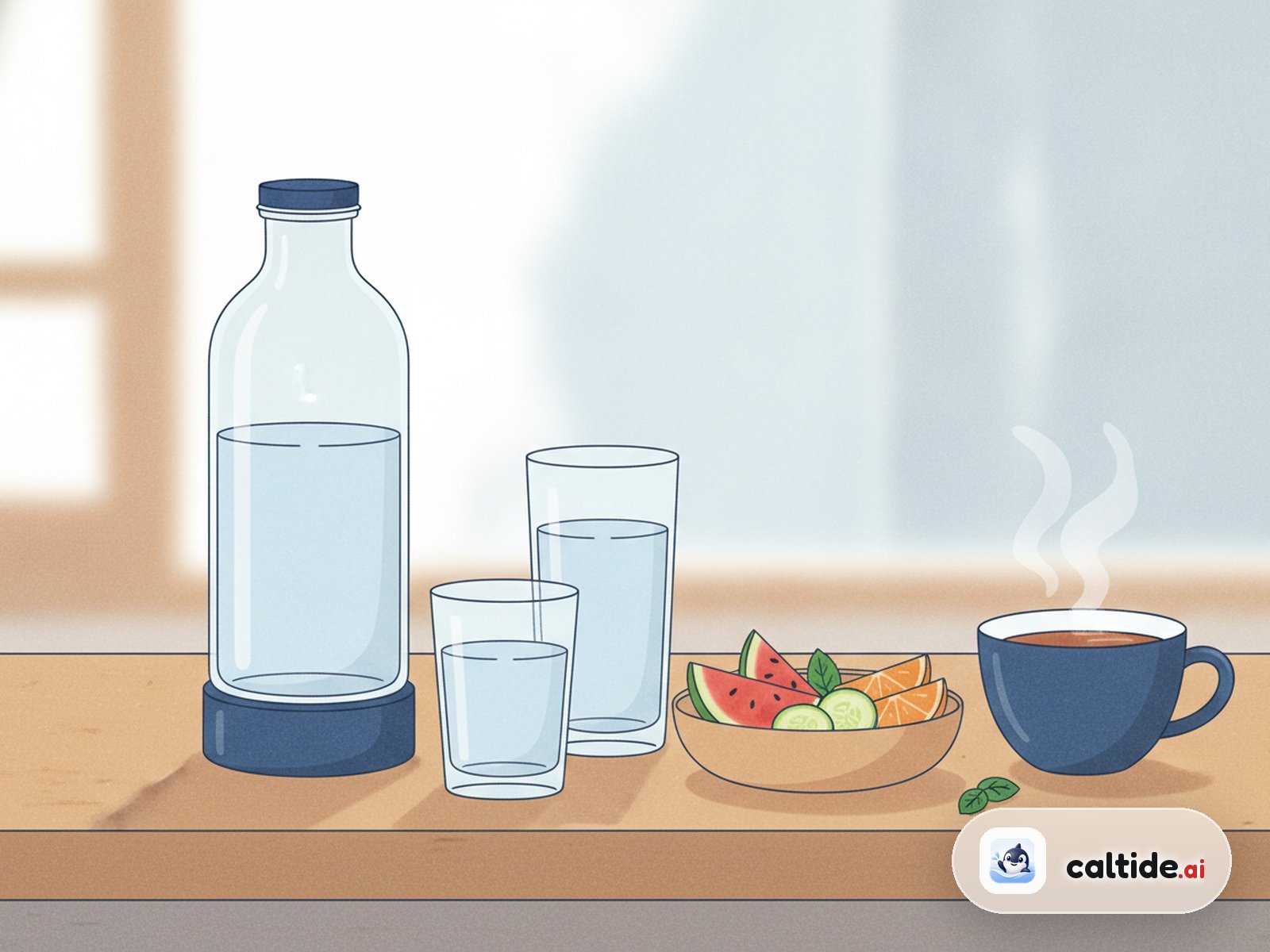
Food matters more than most people think. Fruit, vegetables, soup, yogurt and cooked grains are mostly water, and together they supply about 20% of a typical day's intake. Take that fifth away and you get the part you drink.
From total water to what you drink
These are reference amounts for healthy, moderately active adults in a mild climate. They are not a minimum you must hit every day.
Europe sets lower numbers. The European Food Safety Authority puts adequate total water at 2.0 litres for women and 2.5 litres for men, which works out to about 1.6 and 2 litres from drinks. Both bodies based their figures on what healthy, well-hydrated people actually take in, so the gap is a useful reminder: there is a sensible range, not one magic number.
Sources: National Academies, Dietary Reference Intakes for Water and EFSA scientific opinion on water.
How many ounces of water should I drink a day?
In US fluid ounces, the drinks part comes to about 74 fl oz for women and 101 fl oz for men. The old "eight glasses of 8 ounces" rule gives 64 fl oz (1.9 L). That is a reasonable floor for many people, but it was never based on research, and it sits below both US reference amounts.
Use this table to move between litres, ounces and glasses. One litre is 33.8 US fl oz, and a US cup is 8 fl oz (237 ml).
| Litres | US fl oz | 250 ml glasses | 8 oz cups | Who it fits |
|---|---|---|---|---|
| 1.5 L | 51 fl oz | 6 | 6.3 | Small adults, cool weather, lots of watery food |
| 1.9 L | 64 fl oz | 7.6 | 8 | The 8x8 rule |
| 2.2 L | 74 fl oz | 8.8 | 9.3 | US drinks reference for women |
| 2.5 L | 85 fl oz | 10 | 10.6 | A common middle goal |
| 3.0 L | 101 fl oz | 12 | 12.7 | US drinks reference for men |
| 3.7 L | 125 fl oz | 14.8 | 15.6 | Hot days, long workouts, larger bodies |
| 3.8 L | 128 fl oz | 15.1 | 16 | One US gallon |
You will also see "drink half your body weight in ounces". For a 160 lb person that gives 80 fl oz (2.4 L), which lands near the reference amounts anyway. It is a rough guide, not a medical rule, and it overshoots for heavier people who are not very active.
What raises or lowers your water intake?
The reference amounts describe an average day. Your own number moves with a few things you can usually predict.
Heat and humidity
On a hot day you sweat even while sitting still. Add a glass or two (250 to 500 ml) when it is warm, and more when you are outside for hours. Dry air on planes and at altitude also takes more water through your breath.
Exercise and sweat
Sweat losses during exercise usually run from about 0.5 to 2 litres an hour, depending on effort, heat and the person. For a normal 30 to 60 minute workout, one extra glass or two before and after is enough for most people. For long or very sweaty sessions, weigh yourself before and after: each kilogram lost is about a litre of fluid to replace. Very long sessions also lose salt, so a salty snack or a sports drink helps there. Our sodium guide explains how much salt you take in on a normal day.
Body size
A bigger body loses more water and burns more energy, so it needs more. A small, mostly sedentary adult may do well on 1.5 litres of drinks. A tall, active one may need 3 litres or more.
Pregnancy and breastfeeding
The US reference rises to about 3.0 litres of total water a day in pregnancy and 3.8 litres while breastfeeding. EFSA suggests adding about 300 ml a day in pregnancy and 600 to 700 ml while breastfeeding. Follow your midwife or doctor if they give you a different number.
Caffeine and alcohol
Coffee and tea count. Caffeine has a mild effect on urine output, but in the amounts most people drink, a cup of coffee still leaves you with more water than it takes away. See our caffeine page for daily limits. Alcohol is different: it suppresses the hormone that holds water back, so a glass of water between alcoholic drinks makes sense.
Illness and medication
Fever, vomiting and diarrhoea raise your needs fast. Some conditions, such as heart failure or kidney disease, and some medicines lower the amount you should drink. If a doctor has given you a fluid limit, that limit wins over anything here.
How to tell if you are drinking enough water
For healthy adults, two checks are free and work well:
- Urine colour. Pale yellow, like straw, means you are well hydrated. Dark yellow or amber means drink more. Completely clear all day can mean you are drinking more than you need. B vitamins can turn urine bright yellow without meaning anything about hydration.
- Thirst. Thirst switches on when your body is short by a small amount, well before any harm. If you rarely feel thirsty and drink with meals and when you want to, you are probably fine.
Thirst is less reliable in older adults, in children who are playing hard and during long exercise in heat. In those cases, a set routine or goal helps more than waiting to feel thirsty.
Short-term changes on the scale are often water too. If your weight jumps after a salty meal, our post on how to lose water weight explains why it usually leaves on its own.
Can you drink too much water?
Yes, but it is rare. Healthy kidneys can get rid of roughly 0.8 to 1 litre an hour. Drink much more than that, hour after hour, and the sodium in your blood gets diluted. This is called hyponatraemia.
Who is at risk. Most cases happen in endurance athletes who drink far more than they sweat, in drinking challenges, and in people with certain medical conditions. Early signs are nausea, headache, confusion and swelling. It is a medical emergency. Drinking to thirst during long events, and not forcing water down on a schedule, prevents most cases.
Spreading your water through the day keeps you far from this. Even a gallon (3.8 litres) over 16 waking hours works out to about 240 ml an hour, well within what your kidneys handle.
How to set a daily water goal and track it
A goal turns a vague "drink more" into a number you can see. Here is a simple way to pick yours:
- Start from 2.2 litres (74 fl oz) for women or 3 litres (101 fl oz) for men, or 2 to 2.5 litres if the EFSA range suits you better.
- Add 250 to 500 ml for hot days or workouts.
- Check your urine colour for a few days and adjust up or down.
- Tie drinks to things you already do: a glass when you wake up, one with each meal, one at your desk mid-morning and mid-afternoon.
In the Caltide app, the daily water goal starts at 2,500 ml (about 85 fl oz), right between the two references. The Today screen has a water tile with a plus button that logs one glass in a single tap. It shows how much is left until the goal and says when the goal is met.
Open the water sheet and you get three buttons: Glass, Bottle and Large bottle. They start at 250 ml, 500 ml and 1.5 L, or 8, 16 and 20 fl oz if you use ounces. You can resize each one to your own glass or bottle, anywhere from 50 ml to 3 litres, and the plus on the Today tile follows your Glass size. Logged one too many? Undo removes the last glass. If you tend to forget, you can switch on water reminders in settings, which are spread through your waking hours.
Your reports show your average water per day and on how many days you met the goal. They also include a "Water from foods" card that lists the foods that gave you the most water, so you can see the fifth of your intake that comes from your plate.
Log your water and meals in one place
Start with a 2,500 ml goal, size the buttons to your own glass and bottle, and see how much water your food adds.
Frequently asked questions
Yes. Coffee and tea are mostly water. Caffeine has a mild effect on urine output, but in normal amounts you still keep most of the fluid from the cup. Stay within about 400 mg of caffeine a day, roughly four cups of brewed coffee, and count the rest of your drinks as usual.
The same amount as everyone else: about 74 fl oz for women and 101 fl oz for men from drinks. Water does not burn fat. It helps when it replaces sugary drinks, and a glass before meals may help you feel full sooner. Weight loss still comes from eating fewer calories than you burn.
For most healthy adults a gallon (128 fl oz, 3.8 litres) spread over the day is safe, but most people do not need it. It makes sense on hot days or with long workouts. Do not drink it in a few hours, and skip it if a doctor has given you a fluid limit.
Check your urine and your thirst. Pale yellow urine and rarely feeling thirsty mean you are drinking enough. Dark yellow urine, headaches and feeling tired can mean you need more. Older adults and people exercising in heat should drink on a routine, since thirst shows up later for them.
Yes. Food supplies about 20% of daily water for most people. Cucumber, watermelon, lettuce, tomatoes, oranges, soup and yogurt are mostly water. That is why the reference total of 2.7 or 3.7 litres works out to only about 2.2 or 3 litres from drinks.